When heat becomes a stress test: what extreme temperatures mean for PV systems and battery storage
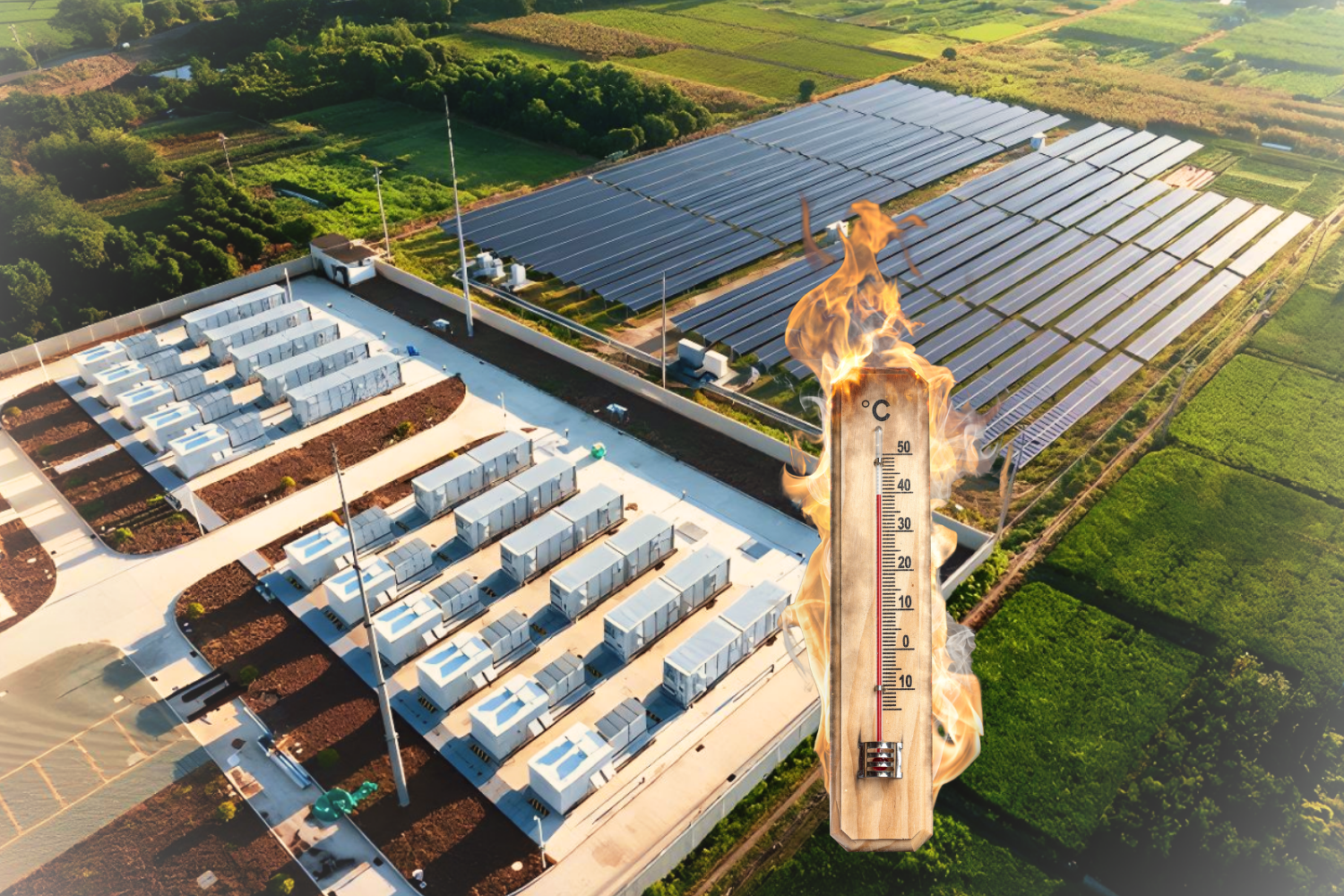
Photovoltaics rely on sunlight. Battery storage systems rely on absorbing and releasing energy exactly when the power grid needs it. Both sound like an ideal combination for hot summer days: plenty of sun, high generation, rising electricity demand due to cooling, and a greater need for flexibility in the grid. From Andreas Kern and Philippe Staudinger
In practice, it’s more complex.
Heat waves are not just a weather phenomenon for solar and storage systems. They are a real-world stress test for modules, inverters, battery systems, sensors, communication, control systems, maintenance processes, and operating strategies. They reveal how well a system performs not only in the planning phase but also during actual operation.
The current heat wave in Germany provides a prime example of this. According to preliminary data from the German Weather Service, new record highs were recorded in late June. At the same time, similar trends across Europe show that extreme heat is no longer a localized, marginal issue but is becoming a recurring operating condition for renewable energy plants.
According to the International Energy Agency, global solar capacity additions rose to more than 600 GW in 2025. Battery storage is also scaling up significantly faster. The IEA reported global storage capacity additions of 108 GW for 2025. Solar and storage systems are thus moving beyond the realm of individual projects and becoming critical energy infrastructure.
Just build, connect, and let it run? Heat reveals whether systems are being operated professionally.
PV modules need sunlight. But high cell temperatures reduce output.
Intense solar radiation isn’t the problem. The critical factor is temperature. PV modules are rated under standard test conditions: 1,000 W/m² of irradiance and a cell temperature of 25 °C. In the field, cell temperatures on hot days are significantly higher. Depending on the module, mounting type, wind, rear ventilation, and surroundings, modules can become significantly hotter than the air temperature.
For crystalline silicon cells, output typically decreases as the temperature rises. PVeducation cites a power loss of about 0.4 to 0.5 percent per degree Celsius for silicon. If the cell temperature is not 25 °C but 65 °C, this corresponds to a power loss of about 16 percent compared to standard conditions, given a temperature coefficient of minus 0.4 percent per degree.
For operators, this distinction is crucial. Those who look only at raw yield figures are missing the bigger picture. The more important question is: Did the system perform as it should under actual irradiance and temperature conditions?
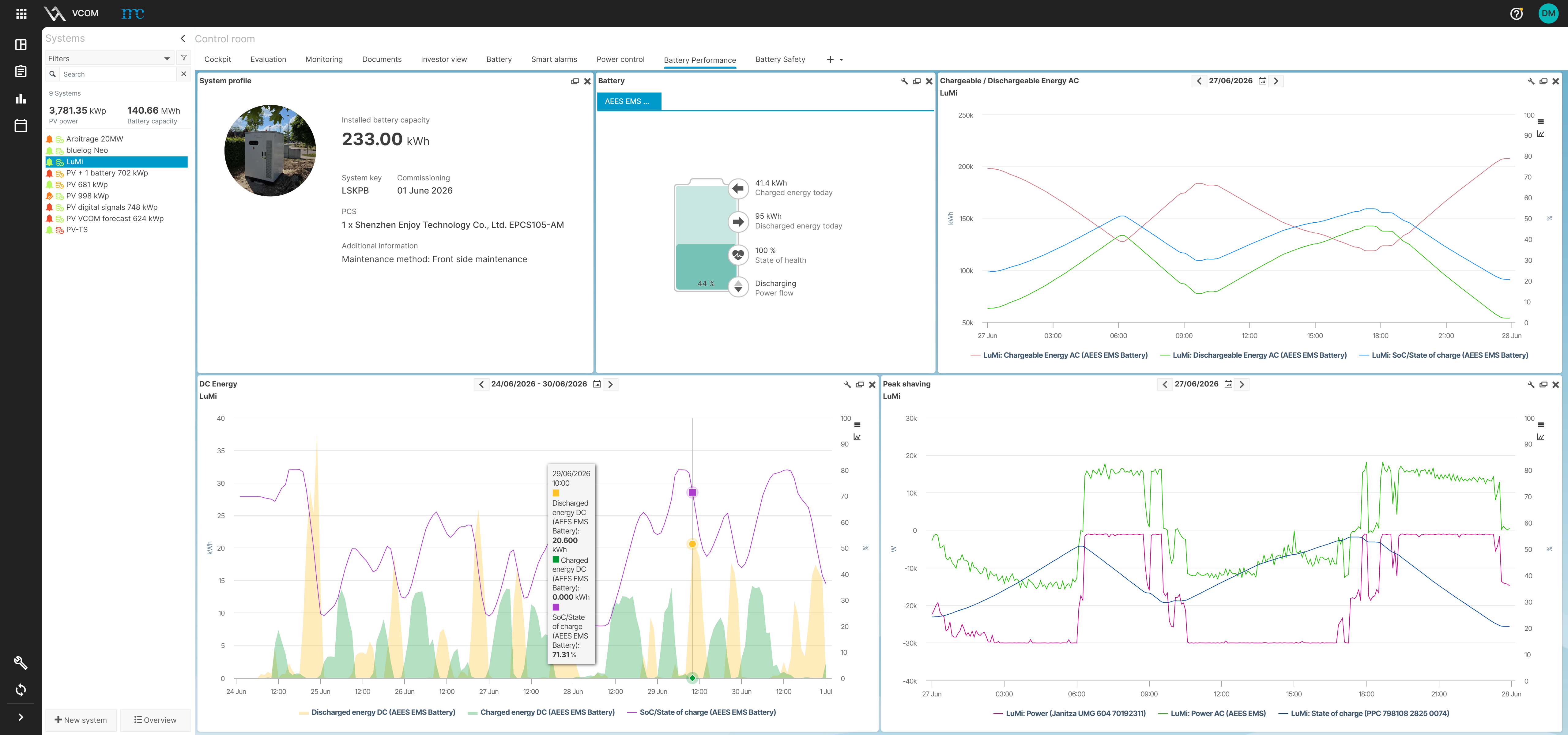
Heat does not cause every fault. It reveals faults earlier.
Extreme temperatures are rarely the sole cause of a problem. More often, they reveal existing weaknesses. These include dirty modules, partial shading, vegetation, damaged cell areas, defective bypass diodes, contact issues, faulty connectors, abnormal strings, or inverters reaching their thermal limits. Under high irradiance, current flows and thermal loads increase. This can cause minor imbalances to become more pronounced.
Hotspots are a typical example. They occur when individual cell areas are subjected to greater stress than the rest of the module. Causes can include shading, soiling, cell damage, connection problems, or defective bypass diodes. Under high irradiance, a local electrical effect can turn into a thermal problem.
Hotspots are not just a performance issue. They can accelerate material aging, cause visible damage, and, in the worst-case scenario, increase safety risks. Therefore, they must not simply be listed as a finding in an inspection report. They must be addressed through a clear process: identify, assess, prioritize, resolve, and verify.
Module aging is also not a single event. PV modules age over the course of years due to irradiation, temperature, humidity, mechanical stress, and electrical stress factors. IEA PVPS describes typical failure modes such as delamination, backsheet issues, cell cracks, burn marks, potential-induced degradation, and junction box problems. Many of these effects do not occur overnight. They develop over the course of the system’s operational life and become more clearly visible under certain conditions.
A hot summer is therefore not an isolated event. It is part of the lifetime stress on a system.
Battery storage amplifies the system challenge
With battery storage, the issue of heat becomes even more relevant, as it changes the operational logic of the entire system. A storage system can absorb excess solar energy, smooth out feed-in peaks, reduce curtailment, shift energy to more valuable hours, provide grid services, and stabilize load profiles. This is precisely why storage is becoming increasingly important in markets with a high share of PV.
But storage systems have their own physics: Lithium-ion batteries age due to calendar aging and cycle aging. Temperature, state of charge, depth of discharge, C-rate, idle times, and operating strategy all influence how quickly capacity and performance decline. NREL and other studies clearly show that high temperatures, high states of charge, and deep cycles can accelerate aging.
For operations, this means that the best way to operate a storage system is not necessarily at maximum throughput. A storage system that capitalizes on every short-term arbitrage opportunity may lose value in the long run if degradation, thermal stress, and operating costs are not factored into the pricing.
Heat also affects storage systems on several levels. Cooling systems must work harder, self-consumption increases, and thermal reserves decrease. Battery systems may reduce their output when cell, rack, or container temperatures reach threshold values. At the same time, prolonged periods of high temperature and high state of charge can accelerate calendar aging.
This is particularly relevant in PV-coupled applications, where storage systems are charged rapidly at midday and then remain for hours at a high state of charge and high ambient temperature.
Safety is also a key issue. Modern battery systems feature battery management systems, temperature sensors, fire protection concepts, and shutdown logic. Nevertheless, thermal runaway remains a significant risk. EPRI points out that an internal cell defect that occurs after the battery leaves the manufacturing line cannot be completely ruled out by operational technology. It is therefore crucial to prevent the spread of thermal runaway, manage off-gas, and design and operate systems in such a way that a single fault does not lead to a system-wide event.
PV and storage must be considered together
In hybrid systems, two effects interact: The PV system produces a lot of energy during high irradiance but loses some of its potential output due to high cell temperatures. The storage system is intended to absorb excess energy, shift load peaks, and stabilize the power system, but it is also subjected to greater stress due to high temperatures.
This creates conflicting objectives during operation. A storage system can be fully charged at noon, even though the ambient temperature is high. It can remain at a high state of charge for hours. It can be heavily discharged in the evening, while cooling, grid load, and price signals all come into play simultaneously. Each of these decisions can make economic sense—or prove costly in the long run.
What matters, therefore, is not a single operating mode, but the continuous weighing of use cases. The potential gains from trading, optimizing self-consumption, or providing grid services must be constantly balanced against efficiency losses, thermal stress, and accelerated aging. Modern energy management systems take on precisely this task: They continually reassess technical conditions, market signals, and grid signals and derive the appropriate operating strategy from them.
This makes the operating strategy the central control variable in modern PV and storage projects. It is no longer just a matter of properly sizing components. It is about understanding, evaluating, and controlling systems during operation in such a way that short-term revenues do not come at the expense of long-term availability and service life.
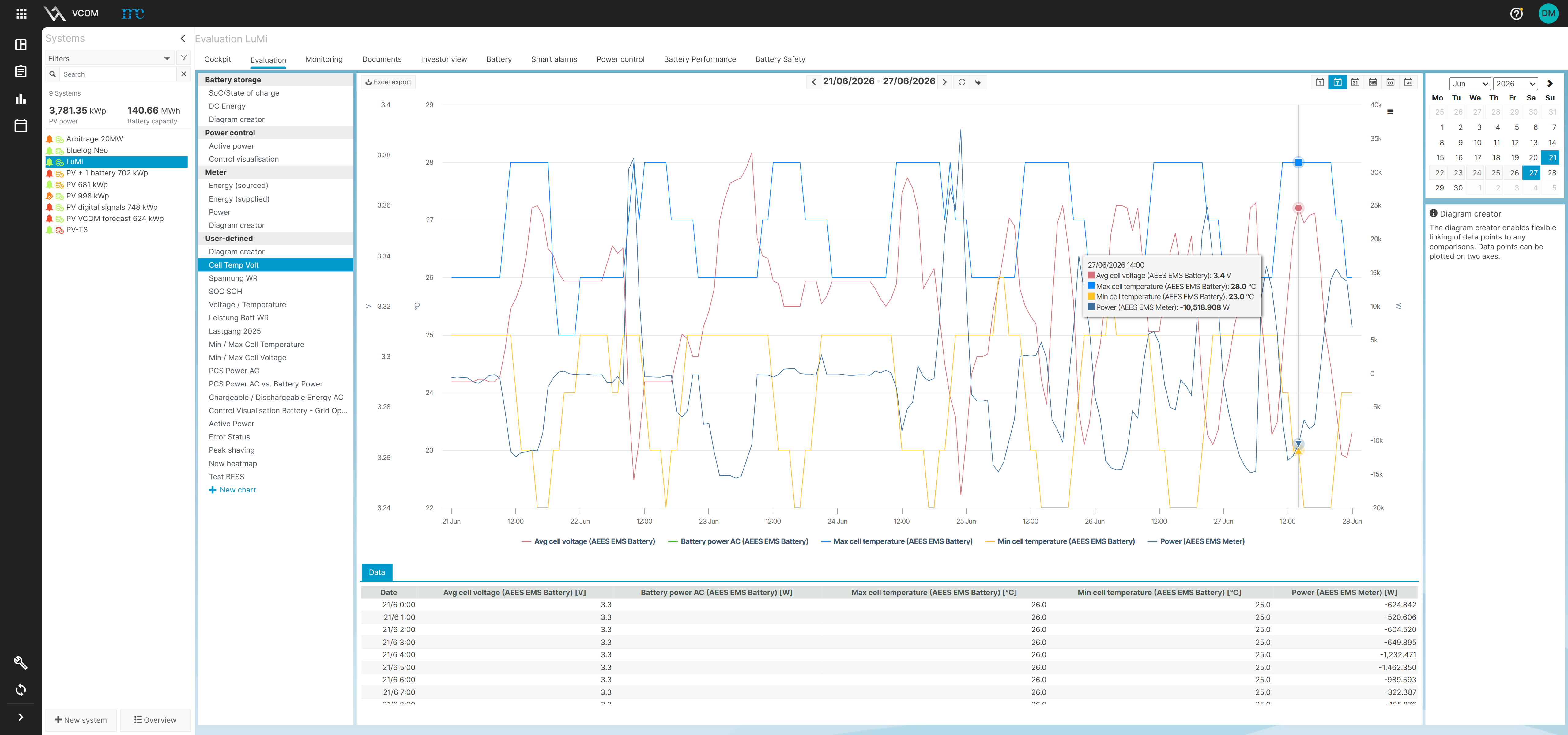
Control determines how systems react under stress
In PV-plus-storage systems, it is not enough to simply monitor generation, state of charge, and temperatures. What matters is how this data is translated into concrete operational decisions. In the face of strong solar irradiance, high temperatures, grid requirements, and volatile prices, a constant balance must be struck regarding how the PV system and storage work together: when to feed power into the grid, charge, discharge, curtail output, or protect the system from thermal damage.
This makes control a central part of operations. It bridges technical limitations with economic goals and grid requirements. The storage system should not be optimized solely for maximum revenue. What matters is whether temperature, state of charge, and aging risks technically justify this operating point. The PV system cannot be optimized solely for maximum feed-in if grid requirements, inverter limits, or storage strategy set different priorities.
It is precisely during heat waves that the robustness of this logic becomes apparent. The battery management system (BMS), energy management system, power plant control, and alarm processes must work together seamlessly. The BMS can detect critical temperatures, cell voltage deviations, or derating conditions. However, it is crucial that such information does not remain within the subsystem but is transmitted to the higher-level plant control system, where it triggers an appropriate response.
Good control therefore does not mean maximum activity, but rather the right response at the right moment: respecting technical limits, adjusting storage operation, controlling grid feed-in in accordance with grid standards, prioritizing risks, and not blindly pitting short-term revenue against service life and availability.
Best practices for operators
1. Heat management begins with system design
Good operation doesn’t start with monitoring, but rather with system design. Especially for PV-plus-storage projects, it’s worth taking a close look at the layout, component placement, and thermal conditions.
For PV modules, shading is generally undesirable because it reduces yield, exacerbates mismatch effects, and can promote hotspots. For battery storage, however, targeted shading can be beneficial because it reduces thermal stress and relieves the cooling system.
This may sound trivial, but in practice it quickly becomes a real conflict of objectives: What maximizes yield for the PV array is not automatically the best solution for storage containers, inverters, transformer stations, or switchgear cabinets.
That is why a system’s design should also consider how the system behaves on hot days: Where does heat build up? Which components are constantly exposed to direct sunlight? How well are storage units, inverters, and electrical infrastructure ventilated or shaded? How easily accessible are critical components for maintenance, inspection, and firefighting?
Questions like these will later help determine how reliably, efficiently, and safely a system can be operated.
2. Test controllability under stress conditions
For PV-plus-storage systems, it is not enough to simply check whether individual components function. What is crucial is whether the system remains controllable as a whole when multiple factors are at play simultaneously: high solar irradiance, high temperatures, grid requirements, storage strategy, inverter limits, and economic operating schedules.
Operators should therefore not only evaluate the control concept on paper but also validate it during operation. Are setpoints reliably adopted? Does the system respond correctly to specifications at the grid connection point? Do active and reactive power control functions work even under high load? Are ramp rates adhered to? Is storage operation adjusted if temperature, state of charge, or derating limits indicate otherwise? And is it clearly documented when and why the system was controlled or derated?
It is especially during hot weather that it becomes apparent whether PV control, storage management, battery management, the energy management system, and power plant control are working together seamlessly. A system can be technically available yet still be poorly managed if setpoints arrive too late, priorities are unclear, or subsystems work against one another.
3. Data quality is the foundation of every evaluation
The next step is a clean database. Irradiance, ambient temperature, module temperature, wind, inverter data, string data, battery temperatures, state of charge, and operating states must be plausible.
Faulty sensors lead to incorrect diagnoses. Incorrect diagnoses result either in unnecessary service calls or in overlooked problems.
4. Performance must be evaluated with temperature correction
Performance metrics should be evaluated after temperature correction. Raw kWh values are not sufficient. Performance ratio, specific yield, and target-to-actual comparisons must account for real-world environmental conditions. Only then can one determine whether a system is behaving as expected or whether a technical anomaly is present.
Operators should also use comparative analysis. Individual strings, inverters, tracker sections, subsystems, or storage containers should be compared to similar units over the same time period.
If all areas react similarly to heat, this suggests a general temperature effect. If individual areas deviate significantly, this indicates a local problem.
5. Consistently prioritize local risks
Hotspots, shading, and soiling should be consistently prioritized. Local effects can have a greater impact, especially during periods of high solar radiation. Vegetation control, cleaning strategies, thermography, and visual inspections should therefore not be considered in isolation but as part of a risk management strategy.
The electrical infrastructure also deserves more attention: connectors, cables, junction boxes, distribution boxes, control cabinets, and transformers are also under stress in hot weather. Poor contacts and high contact resistance can manifest thermally. Thermography should therefore not be limited to modules alone.
6. Energy storage systems require thermal transparency
For battery storage systems, optimal operation begins with thermal transparency. Cell, module, rack, and container temperatures must not only be measured but also evaluated in context. It is not only the absolute maximum temperature that is relevant, but also the temperature distribution. Large temperature variations within a system can indicate cooling problems, airflow issues, sensor errors, or uneven loading.
7. Consciously manage state of charge and aging
State-of-charge windows should be selected deliberately. A storage system does not need to always remain at nearly 100 percent state of charge simply because a lot of PV energy is available. Especially at high ambient temperatures, it can make sense to design operating strategies so that high states of charge are not maintained for unnecessarily long periods.
The cooling system must also be treated as a critical component. HVAC or liquid cooling are not auxiliary systems. They ensure performance, service life, and safety. Filters, air ducts, coolants, compressors, pumps, sensors, and redundancies must be included in maintenance schedules.
8. Take early warning indicators and alarms seriously
Early warning indicators are also important: increasing temperature differences between racks, a noticeable cell voltage deviation, rising internal resistance, declining round-trip efficiency, more frequent derating, unexpected SOC drifts, communication errors, or unusual HVAC runtime durations.
Many of these signals are already detected by the battery management system. However, it is crucial that they do not get stuck in the system. Warnings and alarms must be reliably forwarded to the higher-level plant monitoring system and integrated into operational processes. Only then can technical anomalies lead to concrete decisions: check, prioritize, intervene, or continue monitoring.
A single signal does not yet constitute an emergency. Together, they can reveal a pattern.
9. Systematically Follow Up on Heat Waves
After a heat wave, the system should not simply return to normal operation. Hot days provide valuable data: Which inverters were the first to derate? Which strings showed deviations? Which Sensor data points were implausible? Which storage areas exhibited thermal anomalies? Which alarms were helpful, and which were just noise? Such analyses lead to improved operation.
What we can learn from this as an industry
Heat waves reveal how renewable energy systems perform under conditions that are increasingly becoming the norm. High solar irradiance, high cell temperatures, thermally stressed inverters, battery storage systems requiring active cooling, and rising demands from the market and the grid all converge simultaneously. This reveals whether a system was designed solely for ideal operating conditions or whether it can also operate stably, efficiently, and safely under stress.
For PV systems, this means that high generation does not automatically equate to good performance. Temperature-related power losses are expected, but local anomalies are not. Soiling, shading, hotspots, derating, or electrical vulnerabilities must be identified, classified, and prioritized during operation. With battery storage systems, a second layer comes into play: state of charge, temperature, aging, cooling, safety, and economic efficiency must be continuously considered together. An operating point may make sense in the short term but still negatively impact lifespan or availability in the long term.
The crucial step toward maturity therefore lies in the interplay of good system design, a robust data foundation, a clear operating strategy, intelligent control, and effective alarm and service processes. Even during the planning phase, the question arises as to which components require direct sunlight, and which are better protected from heat. During operation, the focus is on respecting technical limits, not blindly running storage systems at maximum throughput, and relaying warning signals in a way that leads to concrete measures being taken in a timely manner.
Heat waves are thus more than just a seasonal extreme. They serve as a practical test of whether PV, storage, and hybrid systems can be understood and managed effectively over their entire lifecycle. Those who systematically analyze such phases learn not only about individual components but also about the quality of the entire operating model.
Learn more about battery storage at meteocontrol Energy

Andreas Kern
He is a Senior Technical Consultant. His responsibilities include providing technical consulting services in the Technical Consulting department. These include, for example, revenue assessments, technical inspections, technical due diligence, and BESS revenue assessments.

Philippe Staudinger
He is Technical Director at mc Energy, where he is responsible for building and advancing the technical organization. He also shapes the operational structures within the C&I energy sector, with a focus on the development and implementation of decentralized battery energy storage systems (BESS) for commercial and industrial customers.